November 17, 2026 · by Tidey Ocean Foundation
Ocean cleanup charities: two ways to stop plastic, and what your donation does
The Ocean Cleanup catches plastic at sea and in rivers. Tidey Ocean pays people in Guatemala to collect it on land first. Here's how the two compare.
If you search for an ocean cleanup charity, The Ocean Cleanup is usually the first name you see. They've earned it: big engineering, a lot of press, and more than 45 million kilograms of trash pulled from rivers and the ocean by the end of 2025.
We're Tidey Ocean, a much smaller group working on the same problem from the other end. We pay people in Guatemala to collect plastic on land, before it reaches the sea. Here's an honest look at how the two approaches compare, and what your donation does with each.
Two ways to keep plastic out of the ocean
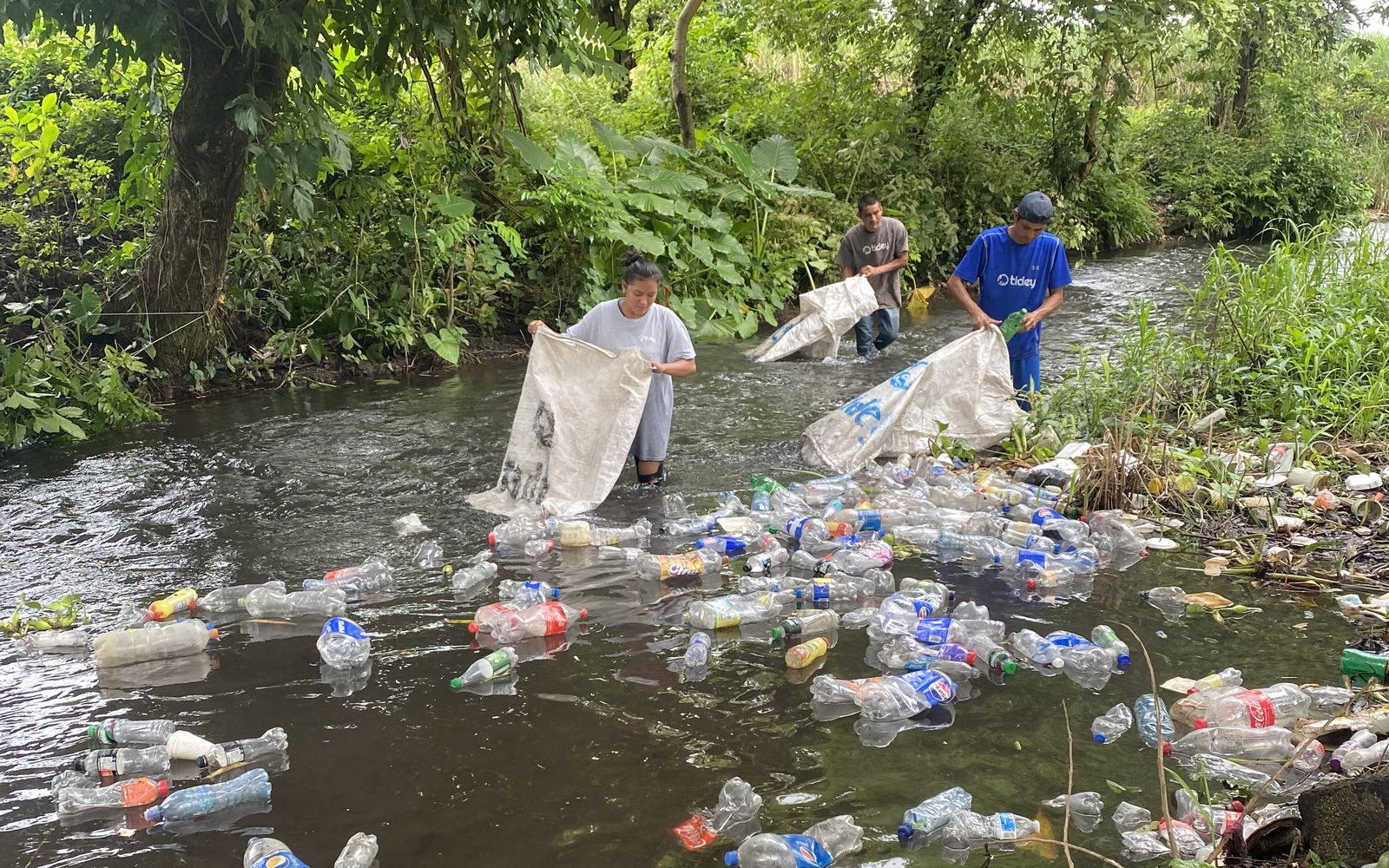
The Ocean Cleanup builds technology. In the Pacific, ships tow a long floating barrier through the Great Pacific Garbage Patch. In rivers, their Interceptors (floating barriers and solar-powered boats) catch trash as it flows downstream. One is in Guatemala, on the Rio Las Vacas near Guatemala City, where they pulled out about 1.4 million kg during a single flood in 2024.
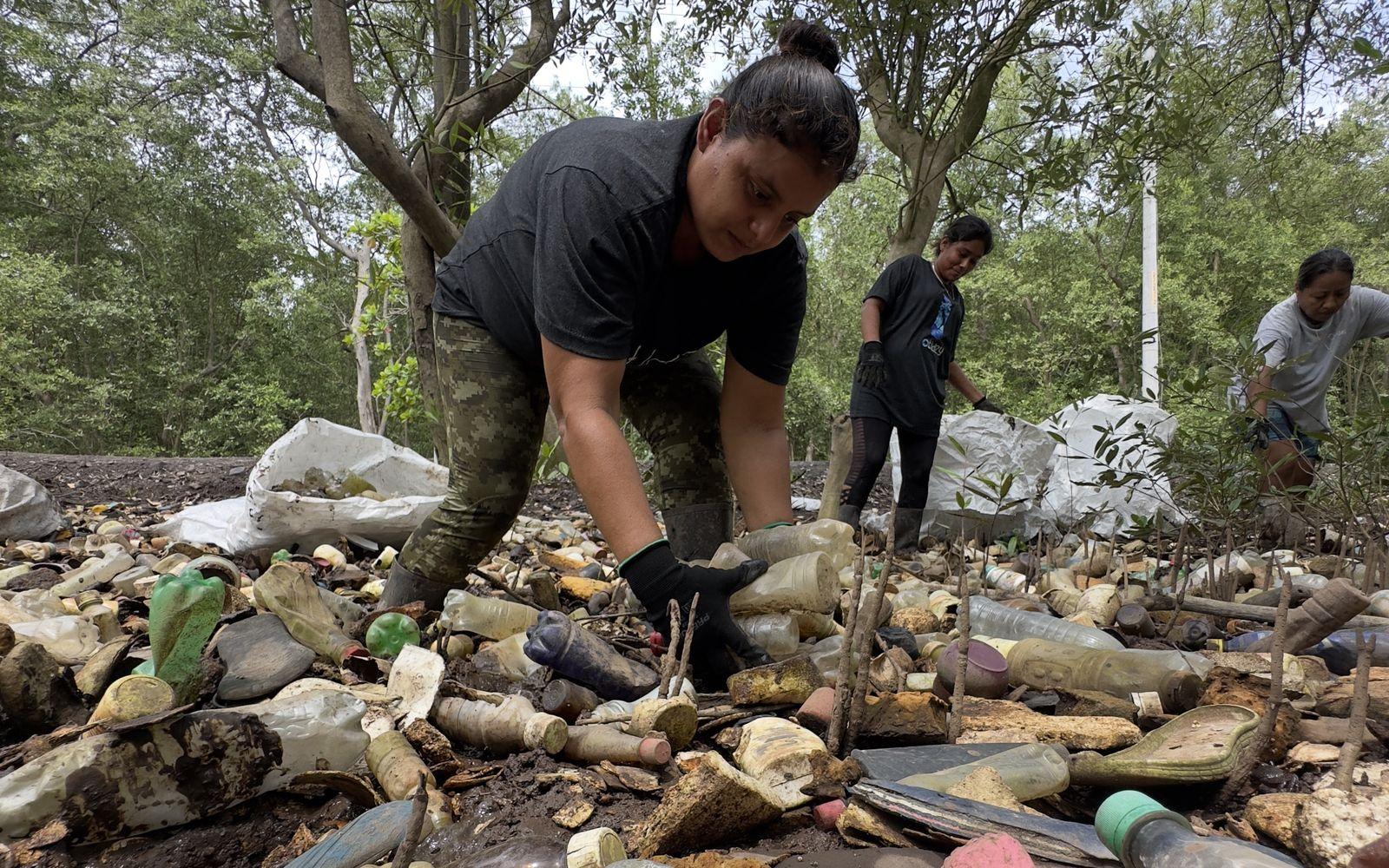
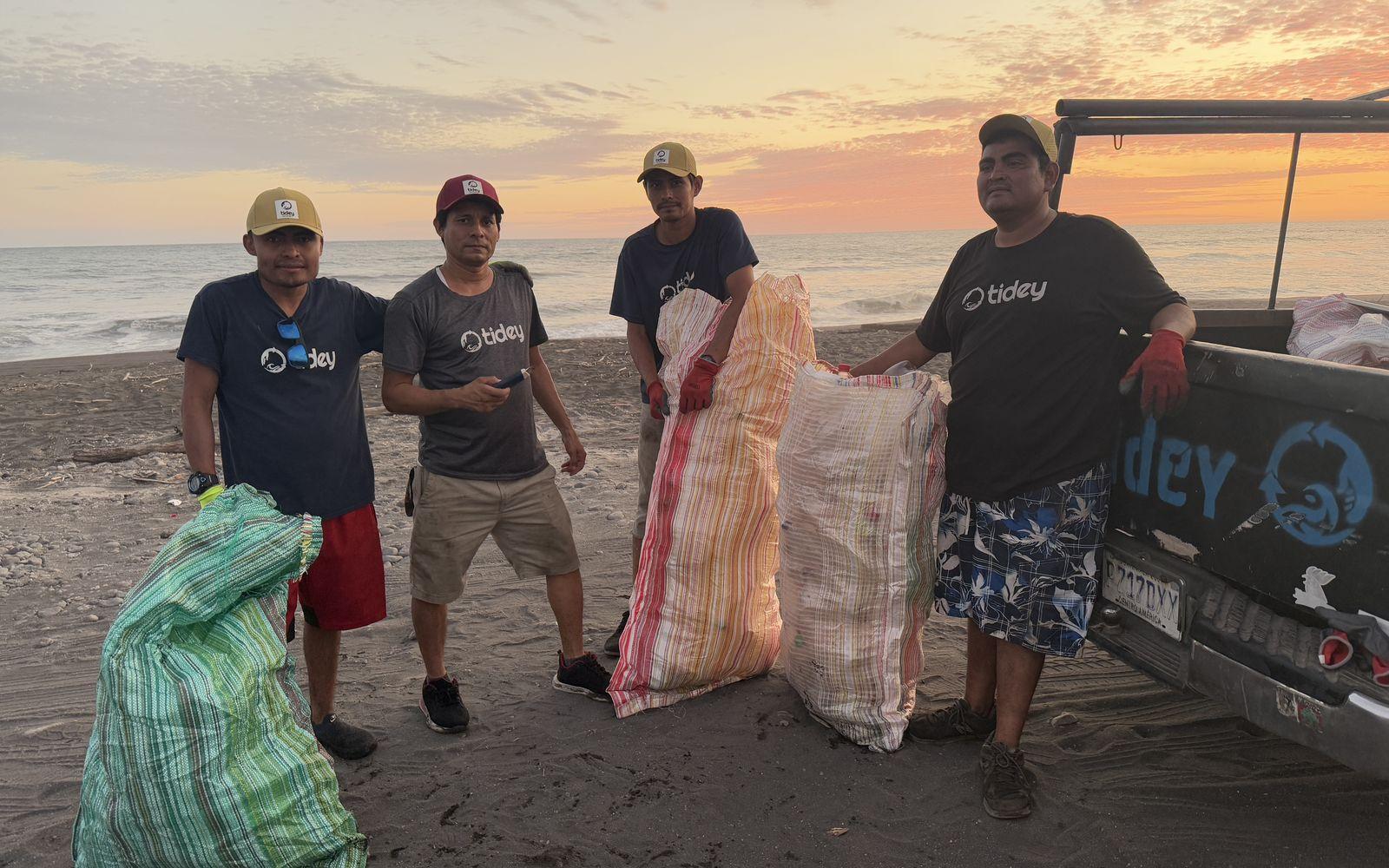
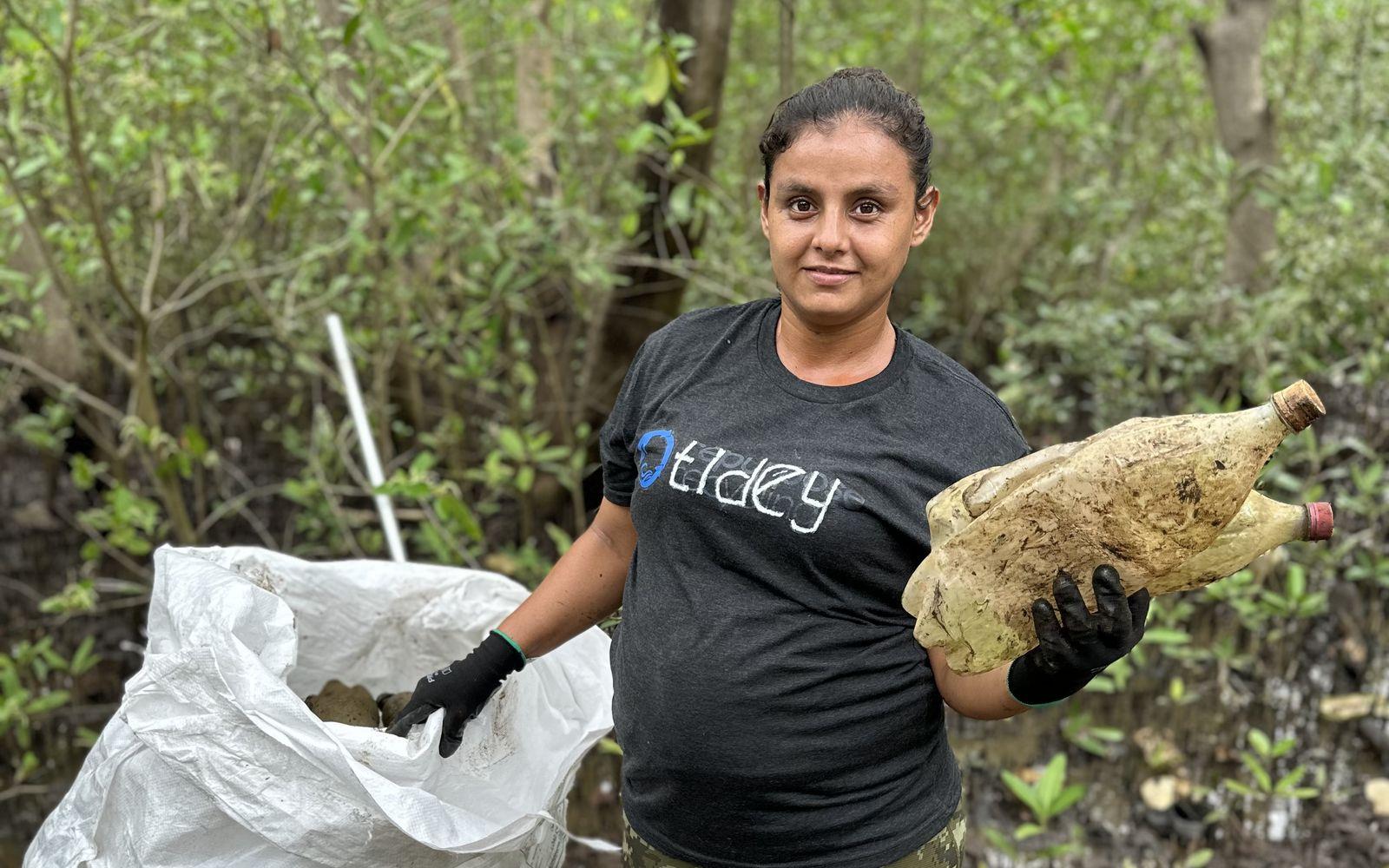
Tidey Ocean pays people. More than 250 collectors on Guatemala's Pacific coast gather plastic from riverbanks, roadsides, streets and homes, and we pay them for the plastic they bring in. We bale it and sell it to recyclers in Guatemala. Since 2021 that adds up to more than 1.7 million pounds.
One catches plastic after it's already in the water. The other picks it up before it gets there, and pays local families to do it.
What your donation does
A large share of every dollar we spend in Guatemala goes straight to people: the collectors we pay for the plastic they bring in and the local crew who sort and bale it. Then selling that plastic to recyclers pays back about half of our costs, so donors cover roughly the other half.
| The Ocean Cleanup | Tidey Ocean | |
|---|---|---|
| Where plastic is caught | The ocean garbage patch and rivers, mostly by machine | On land near rivers and the coast, by hand |
| Who gets paid | Mostly engineers, ship crews and contractors | A large share goes to 250+ local collectors, paid for the plastic they bring in, and our local sorting crew |
| Rough cost per pound (our estimate) | About $1.90 in 2024 | About $0.50 all in, counting only plastic sent to recyclers |
| What happens to the plastic | Ocean plastic is brought to shore for recycling. They don't publish where their river catch ends up. People who have worked on their Guatemala project tell us much of it goes to Guatemala City's Zona 3 landfill, where a lot of it came from in the first place | Most is sold to recyclers in Guatemala. What's left is mostly dirt and contamination, and some has to be thrown out |
About these numbers. The Ocean Cleanup hasn't published a cost per pound, so their figure is our own rough estimate from their 2024 annual report, the latest with full financials: about €45 million spent and about 11.7 million kg of trash removed. That spending covers research, engineering and their ocean work, not just river cleanup, and their totals count all the trash their systems catch, not only plastic. Their 2025 catch was about double 2024's, so their cost per pound has likely come down, and we'll update this when their 2025 numbers come out. Our figure is our all-in cost to collect and recycle a pound of plastic, from our own books and purchase records. It only counts plastic actually sent to a recycler: dirt and other contamination, about 15% of what comes in, is removed first and not counted.
Why we collect at the source
The biggest reason is people. For our collectors, plastic is income. We pay them for the plastic they bring in, and they earn bonuses toward things families actually need, like water filters, cookstoves and roofing.
It also works better for the ocean:
- Plastic is easiest to recover on land. Once it's in a river or the sea it spreads out, sinks or breaks into microplastics that nobody can pick up.
- Your dollar goes further. Selling what we collect to recyclers covers about half of our costs in Guatemala, so a donated dollar does about two dollars of work.
- You can see the work. Every purchase from a collector is logged with who sold it and how much, so the pounds we report come from real transactions.
- We know where it goes. Most of what we collect is sold to recyclers in Guatemala. What's left is mostly dirt and other contamination, and sometimes material has to be thrown out. Pulling plastic out of a river only helps if it doesn't end up in an open dump, which is where much of Guatemala's trash goes and where it can wash right back into the next river.
Where The Ocean Cleanup does well
We're glad The Ocean Cleanup exists. They're the only group taking on the plastic already floating in the Great Pacific Garbage Patch, their river systems can catch a huge amount in a single flood, and they publish their research and have their catch checked by an outside firm.
If you want to fund new technology and cleanup of plastic that's already in the ocean, they're a strong choice. If you want your gift to stop plastic before it reaches the water and put income in the hands of families in Guatemala, that's what we do.
How to choose
Whichever group you give to, four questions tell you a lot:
- How much does it cost them to remove a pound of plastic?
- Where does the plastic end up after it's collected?
- Who gets paid to do the work?
- Can you see the records behind their numbers?
If our answers sound like the kind of impact you want, give to Tidey Ocean. Every $10 funds about 20 pounds of plastic collected, and pays a collector in Guatemala for the work.
Sources
- The Ocean Cleanup. 2025 in review (25M+ kg removed in 2025, 45M+ kg total). https://theoceancleanup.com/updates/2025-in-review-the-ocean-cleanup/
- The Ocean Cleanup. Annual Report 2024 (€45.0M spent, 11.7M kg removed in 2024, 162 staff). https://assets.theoceancleanup.com/app/uploads/2025/10/TOC_AnnualReport-2024-v9_compressed.pdf
- The Ocean Cleanup. Introducing the Interceptor Barricade: The Ocean Cleanup returns to Guatemala. https://theoceancleanup.com/updates/introducing-the-interceptor-barricade-the-ocean-cleanup-returns-to-guatemala/
- greenMe. 1.4 million kg removed from the Rio Las Vacas in one flood (April 2024). https://www.greenme.it/ambiente/rifiuti-e-riciclaggio/14-milioni-di-kg-di-rifiuti-fiume-rio-las-vacas/
- Tidey Ocean figures: 2026 Tidey Registro and the 2025 Impact Report.
Collection numbers, new research on plastic and health, and what we are learning in the field.