December 4, 2025 · by Tidey Ocean Foundation · updated June 11, 2026
Beyond the Wage: How Tidey's Bonus Catalog Was Built
Tidey collectors earn a point per pound and choose from a vetted catalog. Here is how it was built, what has been redeemed, and why we added milestones.
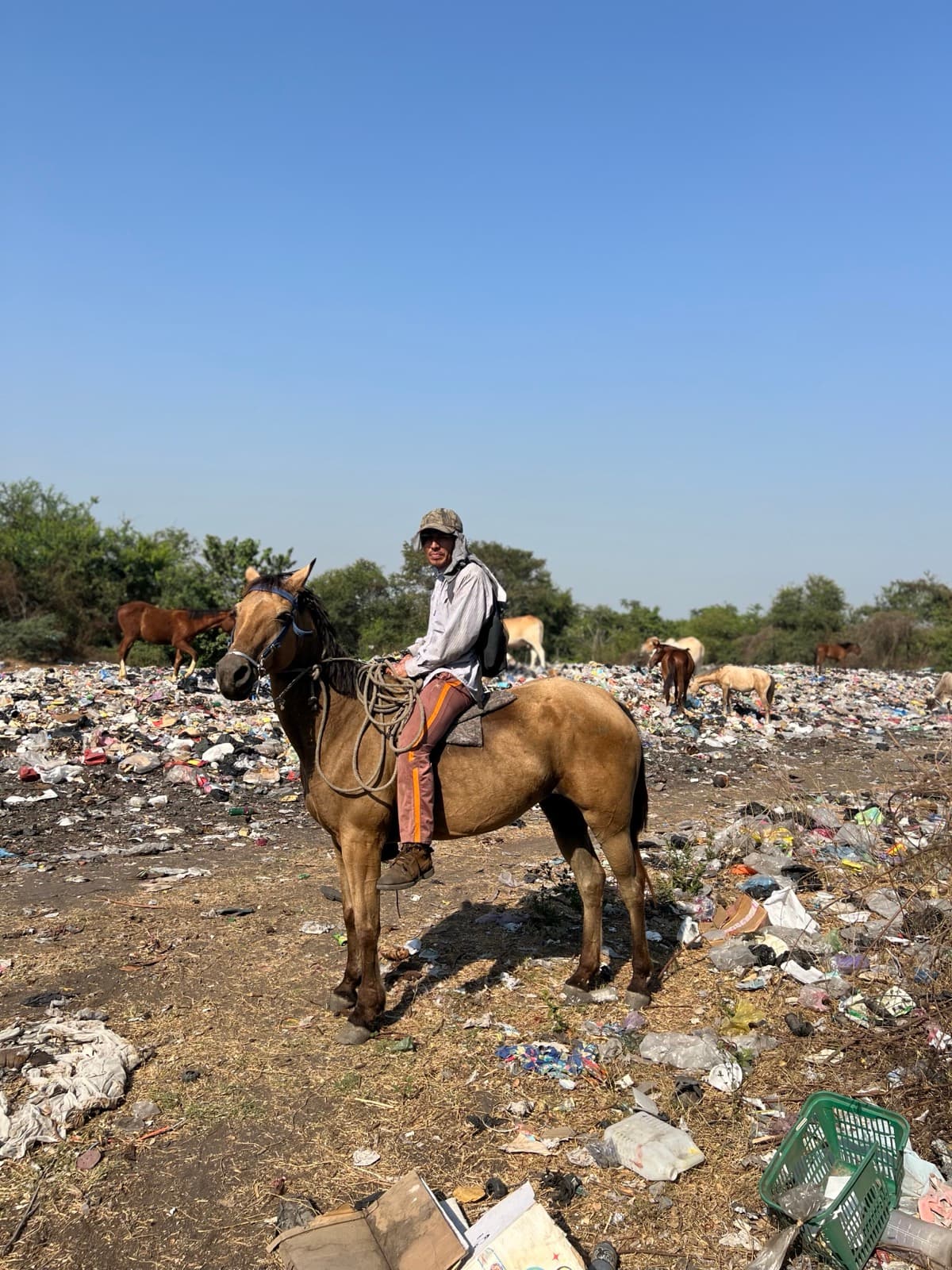
What do people living in extreme poverty actually need in order to be better off in five years? Not one thing. They need a cluster of changes: cooking that costs less and harms less, water that does not have to be bought, food that does not spoil, and assets that keep producing after the money is spent. Tidey Ocean's bonus point program was built around that question, and this post covers how we chose what to put in the catalog, what collectors have redeemed so far, and what we cannot yet claim.
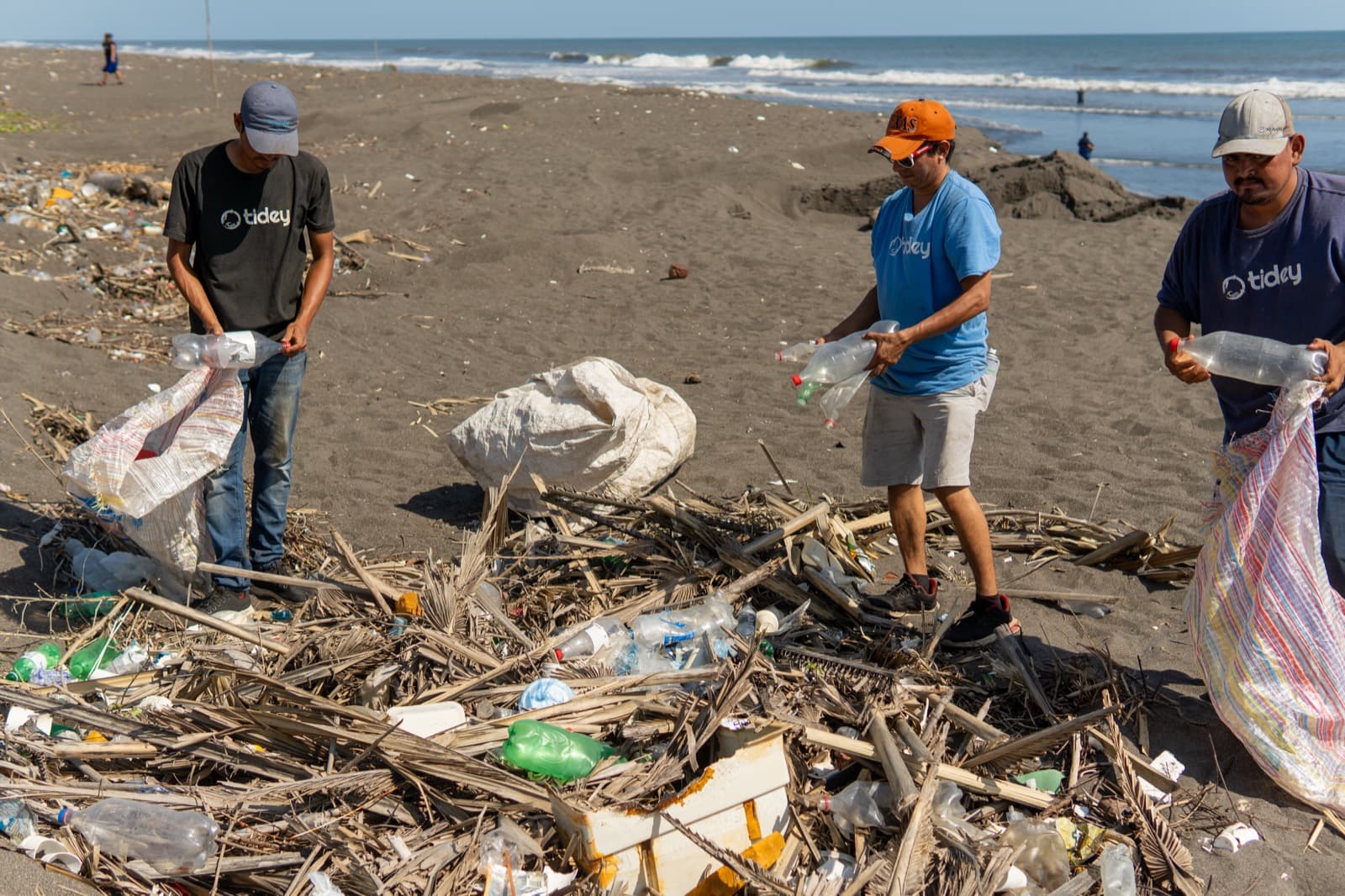
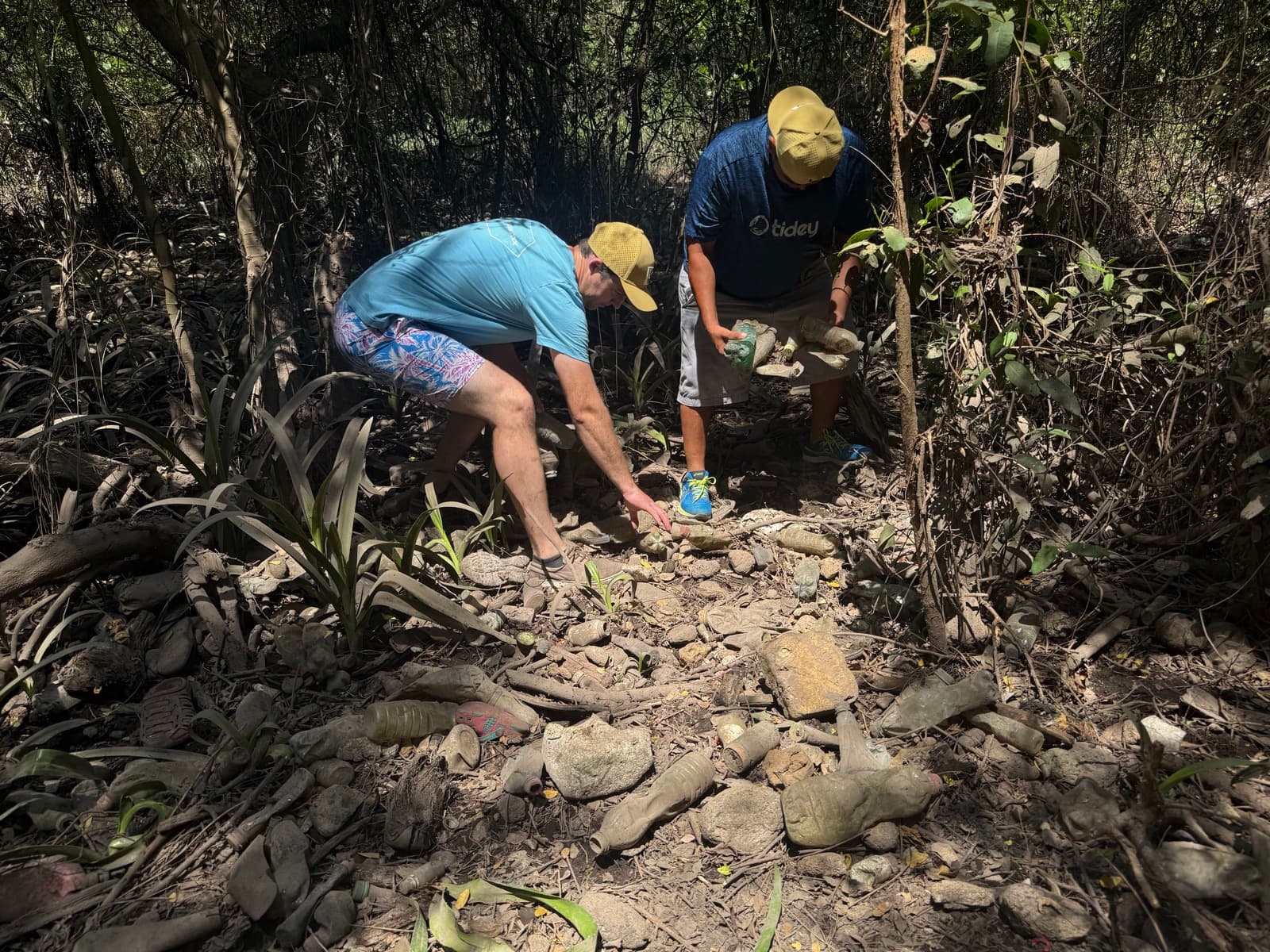
The mechanics are simple. Collectors earn one point for every pound of ocean-bound plastic they deliver to a collection point, on top of the payment they receive for the material itself. Points accumulate with no expiration and no minimum. Every item in the catalog carries a point price, set against what the item costs us and weighted toward the things we most want to encourage. Because points are earned one per pound, a point price is also a quantity of plastic: a collector works toward a specific item by delivering a specific amount of material, and knows before starting roughly what it will take.
One limitation worth stating plainly, because it affects how the program actually works for people. Collectors cannot check their point balance on demand. There is no app, no live dashboard, no way to look it up. Twice a year we bring each collector their balance along with a printed catalog, and that is when they decide whether to redeem or keep accumulating. That is a real constraint on a rewards program, and it is something we want to improve. We would rather describe it accurately than imply a system we do not have.
Redemptions are running. The program covers the collectors in our network and also our Guatemala staff, because the people running the operation live in the same communities and face the same costs. Across everyone who has redeemed so far, deliveries have included 32 sheets of roofing, more than fifty chicks and laying hens, six pigs, four cooking stoves, five orange saplings, two solar lights, two laptops, a washing machine, a water dispenser, work gloves, and food support. In 2026 we delivered the first two water filters, with more scheduled. Every item that has been requested has been delivered.
We are publishing the reasoning alongside the results because a catalog is easy to describe in a way that sounds larger than it is. The evidence behind each category is checkable, and so is what has actually gone out the door. Livestock and roofing lead the deliveries, which is not what we would have predicted when we built the catalog, and that is exactly the kind of thing worth reporting.
That pattern created a design problem worth stating plainly. We built the catalog on research, and collectors, exercising exactly the choice we designed the program around, weighted it toward productive assets and shelter rather than the health items with the strongest evidence behind them. Both of those things are legitimate. A family that needs a roof understands their situation better than we do. But it also meant the items with the best-documented effect on child health were not the ones moving.
Our response was to add a milestone program rather than to override anyone's choice. Collectors who reach 1,000 pounds of lifetime collection qualify for a water filter. Collectors who reach 10,000 pounds qualify for an improved cookstove. These are given in addition to points and are not deducted from any balance, so a collector still spends their own points on whatever they judge their household needs. The milestone layer simply puts the highest-evidence items into homes regardless of what anyone chooses to spend their points on.
We are rolling the filters out now, and we are asking collectors who qualify whether they want one and would use it rather than delivering to everyone at once. A filter that sits in a corner helps nobody, and households in our network do not all have the same water situation. On our current roster, 115 collectors have passed 1,000 pounds and 32 have passed 10,000. Most of our regularly active collectors have cleared the first threshold; the ones who have not are working very part time.
We are still deciding what belongs at the thresholds in between, and adding an item means running the same evidence review we did for the original catalog, so it will take time. A fruit tree is one candidate under consideration. We would rather add slowly and be able to explain each choice than fill the tiers quickly, and we would rather not announce a threshold we are not certain we can honour.
Water filtration sits at the top of the catalog for a specific reason. A 2023 meta-analysis by Michael Kremer and colleagues, published as NBER Working Paper 30835, reviewed randomized controlled trials of water treatment in low and middle income countries and obtained child mortality data from 18 of them. Across roughly 25,000 children, the Bayesian estimate was a 30 percent reduction in the odds of all-cause mortality in children under five, with frequentist methods estimating 25 to 28 percent and an expected reduction of 24 percent in a new study once heterogeneity is accounted for. The authors estimated a cost per disability-adjusted life year averted of between 27 and 66 US dollars, which places water treatment among the most cost-effective health interventions that exist. A filter also removes a recurring household expense, because a family that filters at home stops buying bottled water, which has the secondary effect of reducing their own plastic consumption.
Energy is the category with the clearest link to how poverty compounds in coastal Guatemala. Many households in the communities where we work cook over open wood fires. Wood costs money or it costs hours of gathering, and open-fire cooking produces indoor air pollution at concentrations well above WHO guidance, which drives respiratory illness in the people who spend the most time near the fire. Peer-reviewed field studies of improved cookstoves in rural Guatemala measure fuel savings of 39 percent in Boy et al. (2000) and 59 percent in a later randomized allocation study. Those savings recur every week for the life of the stove, which is why a cookstove earns its place in the catalog over items with a larger sticker price.
Food security items address Guatemala's malnutrition picture, which is the worst in Latin America and the Caribbean at 46 percent chronic malnutrition among children under five according to 2024 World Bank figures. The catalog includes fruit trees priced from 70 points for a banana plant to 840 for a grafted zapote, laying hens, chicks, garden plants, and a refrigerator at the top end for households that can store food safely. These are productive assets rather than consumables, chosen because a mango tree or a laying hen keeps producing long after the points are spent.
The remaining categories follow the same logic. Health items include first aid kits, thermometers, and dental care, chosen for conditions that are cheaper to prevent than to treat where clinic access is limited. Money-saving items include mattress protectors, reusable bottles, and water dispensers, which each remove a recurring cost. Mobility and work items include boots, gloves, bicycles, and a cargo tricycle, which is a genuine income-generating asset for a collector who reaches it. Education items include a laptop.
The catalog was built on a principle we want to be explicit about: collectors know their household's priorities better than we do. Rather than deciding what each family should receive, we vet options for long-term impact and let people choose. A parent of young children in a food-insecure household will weigh a refrigerator differently than a single adult who needs boots for the work. The points system accommodates that without requiring us to assess anyone's circumstances.
That principle only works if we ask, so we do. Catalog additions come from two places: conversations with collectors about what they would find useful, and a survey we run with the collector network that asks directly what people want to see offered. The research base determines whether an item is worth stocking. The collectors determine what gets considered in the first place. Several items in the current catalog are there because someone asked for them, not because we found a study first.
Is the catalog realistically priced against what collectors actually earn? Partly, and we think that is the honest answer rather than a comfortable one. Roughly a third of the collectors on our roster have earned enough for a mid-range item like a water filter. A smaller group has reached the flagship items like an improved cookstove. Only a handful have accumulated enough for the largest appliances, and the median collector reaches the smaller health and work items rather than the headline ones. That distribution is worth stating because a catalog full of items nobody can reach would be a marketing document rather than a program, and because it tells us where the pricing needs to move.
What can a collector do with points today? Earn one per pound delivered, receive a balance and catalog twice a year, and redeem against any item in it. There is no expiration and no cap, so a collector working toward a cookstove or a tricycle can accumulate across years without losing progress.
What has actually been delivered? Roofing sheets, poultry, pigs, cooking stoves, fruit tree saplings, solar lights, laptops, a washing machine, a water dispenser, gloves, food support, and two water filters. Livestock and roofing account for the largest share by count. We report what went out rather than what the catalog offers, because the catalog is a list of intentions and the deliveries are the result.
What is the program not able to claim yet? We can tell you what collectors asked for, because we ask directly and survey the network. We can tell you what they chose. What we cannot yet tell you is whether a household that took six chicks, or a water filter, is measurably better off a year later. Outcome tracking is now built into the collector survey and we intend to follow up specifically on whether filters are still in use months after delivery, which is the failure mode these programs usually have. But the tracking is new and no follow-up cycle has completed, so we have no outcome data to report. Knowing what people want and knowing whether it helped are different things, and right now we have the first without the second. When we have the second we will publish it, including the parts showing we chose wrong.
Sources
- Kremer, M., Luby, S., Maertens, R., Tan, B. & Wiecek, W. Water Treatment and Child Mortality: A Meta-analysis and Cost-effectiveness Analysis. NBER Working Paper 30835 (2023). https://www.nber.org/papers/w30835
- Boy, E. et al. Fuel efficiency of an improved wood-burning stove in rural Guatemala: implications for health, environment and development. Energy for Sustainable Development (2000).
- World Bank. Guatemala nutrition and poverty data (2024). https://data.worldbank.org/country/guatemala
Monthly, from the field in Guatemala.
Collection numbers, new research on plastic and health, and what we are learning in the field. No more than once a month.